
Lenora Pike
What the Sleeping Mind Won't Confess
July 26, 2026
Featuring: Sleepwalker
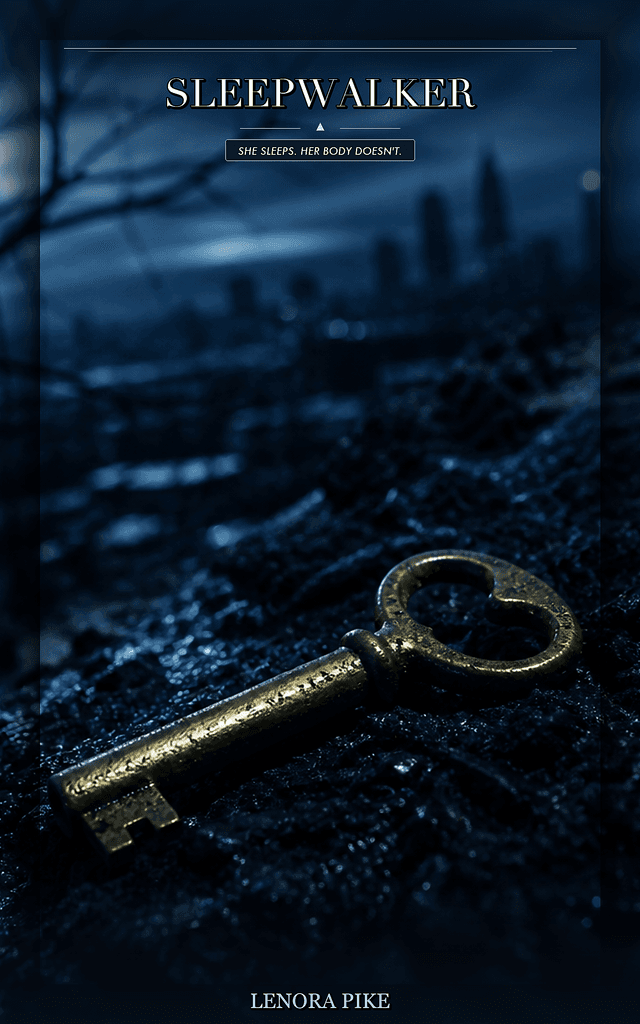
She hasn't worn shoes to bed in fifteen years. So when she wakes up with dirt ground into the soles of her feet and no memory of how it got there, the horror isn't supernatural—it's bodily. Sleepwalker is a thriller about what your own body can hide from you.
The Body as Unreliable Witness
Most of my narrators lie to themselves with their minds—selective memory, convenient rationalization. This time I wanted the betrayal to be physical. Mara doesn't doubt what she remembers; she doubts what her own hands and feet did while she was somewhere else entirely. There's no argument to have with a body. It just presents evidence.
That distinction matters. A narrator who misreads a conversation is making a judgment call you can disagree with. A narrator whose body is producing facts she can't explain is not in control of the story at all. I found that far more frightening to write than any locked room.
A Husband Who Isn't Wrong—Yet
I was careful with Daniel. It would have been easy to make him obviously menacing from page one, but a husband who's telegraphing villainy isn't interesting—he's just a suspect with extra steps. Instead, everything he says to Mara in those early chapters is reasonable. He's worried about her. He wants her to see someone. He starts locking the doors from the outside, and frames it as care. The unsettling part is that he might be right, and that possibility is worse than if he were simply guilty.
A House That Keeps Its Own Records
I set the book in an old farmhouse at the edge of a Vermont town where everyone still uses the original property lines from a hundred years ago, and nothing about the house has been fully modernized. The floors creak in a specific, memorizable order. The back door has a warp in the frame that means you have to lift it to close it all the way. Mara knows these things the way you know your own reflexes. That familiarity is exactly what makes it so damning when the house starts contradicting her—a door closed that she remembers leaving open, a window unlatched that has never, in fifteen years, come unlatched on its own.
Sisters Keep Score
Underneath the mystery is an older wound: what Mara owes her sister, Clara, and what she's never said out loud. I wrote Clara to stay just out of focus for most of the book—present in every important memory, absent from every present-day scene—because guilt works that way. It doesn't confront you. It waits for you to be vulnerable—sleepless, disoriented, unable to trust your own account of the last six hours—and that's exactly when it collects.
The Rule Still Holds
One chapter before you see it coming. That's the deal I make with every reader, and Sleepwalkerkeeps it. When the turn arrives, go back through the early pages—the shoes by the door, the mud on the sill—and you'll find I never hid anything. I just let you assume Mara knew her own house better than she did.